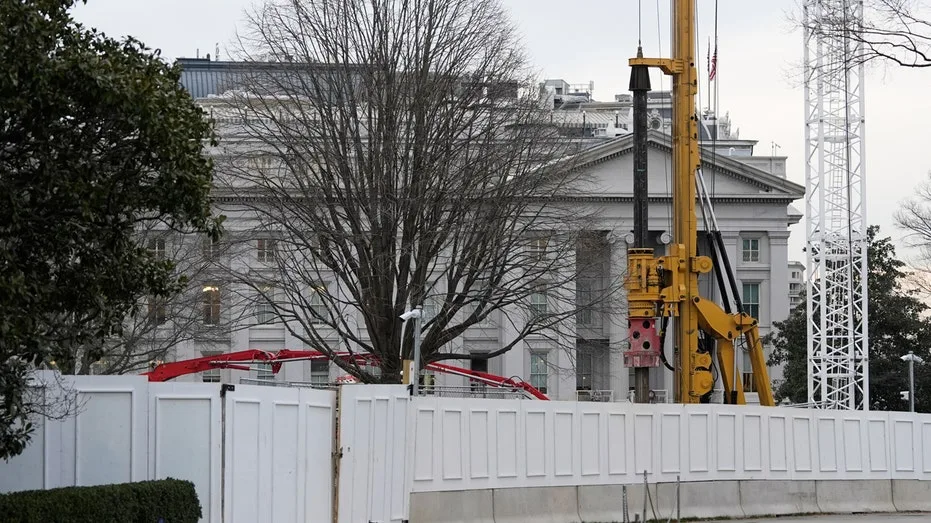
A recent 5-4 Supreme Court decision to dismiss a lawsuit challenging the construction of a White House ballroom has drawn attention to the critical role of judicial appointments and the differing interpretations of constitutional law. The ruling, which allowed the completion of a significant security upgrade, has fueled arguments for prioritizing the nomination of judges with a strict constitutionalist philosophy across the federal judiciary.
The White House ballroom project was initiated last year under President Trump, encompassing not only an indoor ballroom but also a secure underground military facility. The endeavor was designed to replace traditional outdoor event settings, such as the Rose Garden, which were deemed vulnerable to security threats. Historical accounts of outdoor events noted issues like high heels sinking into soft ground, but more importantly, these open areas presented a security risk for high-profile gatherings.
Concerns over presidential security have been highlighted by several incidents. Just over two years ago, Matthew Thomas Crooks reportedly attempted to harm the then-president at a campaign rally in Butler, Pennsylvania. Months later, Ryan Routh allegedly made another attempt at a Florida golf course. More recently, in April, a third individual reportedly tried to attack the president at a Washington D.C. hotel ballroom during the annual White House Correspondents’ Dinner. Such events underscore the perceived need for enhanced security measures within the White House complex, which regularly hosts heads of state, members of Congress, and foreign diplomats, all potential targets for adversaries.
The plan involved demolishing the existing East Wing, described as dilapidated and past its prime, to construct a privately funded, 70-foot-tall indoor ballroom, alongside a subterranean military bunker and a rooftop security installation. This project aimed to provide a beautiful, functional, and secure venue that would serve presidents and their guests for many years.
The Legal Challenge and Lower Court Rulings
The construction project faced a legal challenge from Alison Hoagland, identified as a member of the National Trust for Historic Preservation. Hoagland filed a lawsuit claiming that the new ballroom was unsightly and offended her aesthetic sensibilities, asserting that she regularly walked by the White House vicinity. U.S. District Judge Richard Leon, an appointee from the George W. Bush administration, sided with Hoagland. He issued an injunction that blocked all new above-ground construction for the East Wing unless it was strictly required by the subsurface military facility.
Critics of this ruling characterized it as an overreach of judicial authority, questioning a judge's expertise in overseeing complex construction projects, especially those related to national security. The Democrat-majority D.C. Circuit Court of Appeals subsequently upheld Judge Leon’s injunction, though U.S. Circuit Judge Neomi Rao, a former law clerk to Justice Clarence Thomas, issued a dissenting opinion. The Trump administration then escalated the dispute to the Supreme Court, arguing that continued delays would render the White House complex a protracted construction site.
The Supreme Court's Decision and Dissent
The U.S. Constitution's Article III mandates that a plaintiff must demonstrate