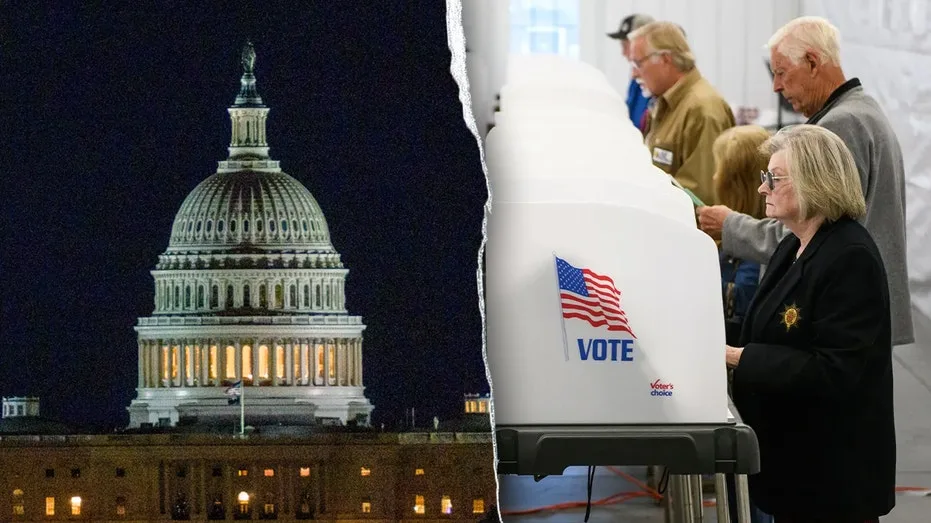
The landscape of electoral contests often resembles a sprawling, multi-faceted competition, with numerous individual races unfolding simultaneously across the nation. For observers, tracking the intricacies of so many campaigns can be an overwhelming task, leading to a focus on headline-grabbing shifts rather than underlying complexities.
Recent analyses, such as those by political handicappers, have indicated a movement of a significant number of House races—reportedly 18—in favor of Democratic candidates. This trend has fueled speculation about a strong Democratic resurgence, with some prematurely declaring the outcome.
However, a closer look at campaign funding reveals a notable discrepancy: Republican candidates reportedly possess a substantial financial advantage. Large Democratic donors, for reasons unclear, appear to be hesitant in contributing, raising questions about their perception of the election's critical nature or their current priorities.
Despite this, a prevailing sentiment, even among some Republicans in private conversations, suggests an expectation that Democrats will secure control of the House. The primary uncertainty, in this view, centers on the size of that majority.
Key Senate Battlegrounds Emerge
Attention often shifts to the Senate, where the balance of power is equally contested, though specific details about individual races may only emerge from daily news reports.
Texas Senate Contest: Paxton's Challenges
In Texas, the Republican Party has reportedly allocated an additional $30 million to support Ken Paxton, a candidate facing considerable scrutiny. Paxton's political history includes an impeachment attempt by his own party, and he was reportedly captured on audio stating that "everybody’s numbers dropped" following President Trump's midterm convention. Even former President Trump has reportedly characterized Paxton as "a pain in the *ss sometimes." Despite these challenges, he remains the party's choice.
His Democratic opponent, James Talarico, had a period of reduced public visibility, which was later attributed to a severe case of the flu. Nevertheless, Texas, often referred to as the Lone Star State, has historically proven a difficult terrain for Democratic aspirations.
Maine's Unexpected Senate Race
Further north, in Maine, the Senate race involving incumbent Susan Collins has drawn interest. One recent poll indicated she trailed Democratic challenger Troy Jackson by four points. Jackson assumed the candidacy after Graham Platner, who had been described as an unconventional candidate known for having a Nazi tattoo, withdrew following an allegation of sexual assault.
Nationally, the sitting President's approval ratings have been reported in the low 30s. This may offer some context for recent campaign activities, such as a presidential appearance in Syracuse, New York, a state traditionally considered a Democratic stronghold.
For Democrats to gain control of the Senate, they require a net increase of four seats. While some express confidence, it remains uncertain whether they can achieve this target. Those who claim certainty about the outcome may be overstating their predictive capabilities.
Michigan's Contentious Senate Debate
A significant focus has been placed on the Michigan Senate race between Democratic socialist Abdul el-Sayed and former congressman Mike Rogers. A recent debate between the two candidates offered a glimpse into their respective campaign strategies.
During the debate, el-Sayed appeared to gain an advantage on points, exhibiting a smoother and more aggressive debating style compared to Rogers, who presented as a more traditional political figure. El-Sayed frequently criticized former President Trump and the war, putting Rogers in a difficult position, as he had previously supported the Iran war but now advocates for its conclusion.
El-Sayed also repeatedly highlighted Rogers' ownership of two yachts, an issue that some might consider peripheral to policy debates.
Conversely, Rogers labeled his opponent a "con man" and attempted to associate him with the Muslim Brotherhood. El-Sayed faced a moment of weakness when questioned about providing aid if Israel were attacked, stating his preference for directing funds domestically.
El-Sayed's defense of Medicare for All and its potential impact on private insurance was also perceived as unconvincing. Given Michigan's proximity to the Canadian border, both candidates expressed opposition to Canadian tariffs, a shift in position for Rogers, during a segment that was reportedly difficult for many to follow due to its intensity and frequent interruptions.
The debate was characterized by constant interjections, with the moderator frequently admonishing both contenders for disrupting each other.
Beyond the Midterms: Looking to 2028
While the immediate focus remains on the current midterm elections, some political observers have already begun to speculate about the 2028 presidential race. Early polls suggest Kamala Harris is leading among potential Democratic candidates, reportedly garnering a quarter of the Democratic vote.
However, a complicating factor has emerged: reports indicate that her husband has privately conveyed to individuals that he does not wish for her to pursue the presidency, a revelation that could be interpreted in various ways regarding her future political ambitions.
As the election season progresses, both political factions continue to emphasize the profound implications of the outcomes, warning that the trajectory of global affairs hangs in the balance.