Journalistic Fatigue: The Pressing Challenges of Fact-Checking Prominent Political Figures
A seasoned reporter observes a phenomenon dubbed 'Trump Exhaustion Syndrome,' suggesting it influences the consistency of journalistic fact-checking.
Opinion·
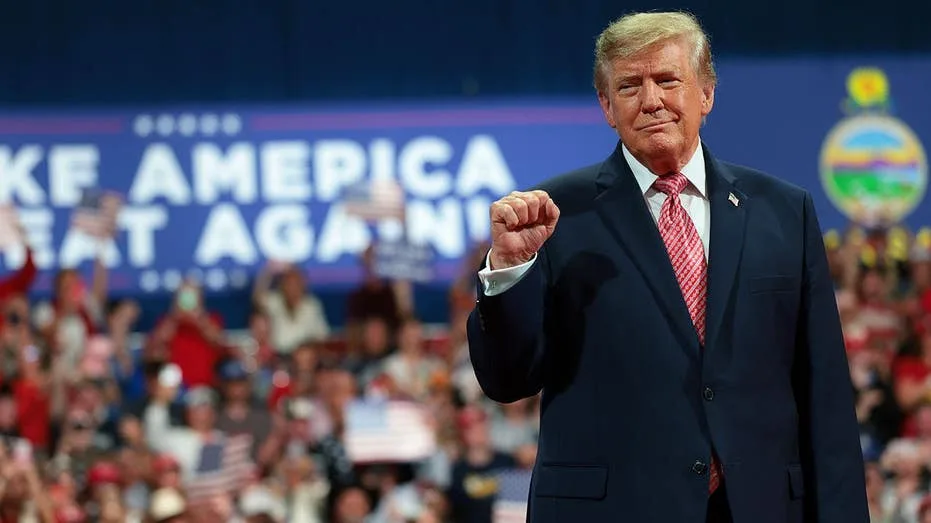
Reflecting on a decade of covering a figure renowned for his affinity for gold, it appears many journalists are experiencing a condition that could be termed 'Trump Exhaustion Syndrome.' This isn't merely physical weariness, though exceptions certainly exist. Rather, it describes a tendency to disengage from fundamental fact-checking, under the assumption that the public is already aware of the numerous questionable statements made by the former president.
This dynamic is significantly influenced by the proliferation of social media. In an environment where immediate, sensational stories, such as a president's comments on a celebrity, dominate, the incentive to produce a detailed, second-day analysis of official actions or statements often diminishes.
Regarding the meticulous verification of facts, concrete examples illustrate this trend.
Navigating Conflicting Narratives and Official Statements
Recently, the former president publicly announced his directive for the Justice Department to intervene in a contentious election in Alaska. His statement was unequivocal and made in the open. There has been a widespread perception that the department often acted in accordance with his wishes, even in cases like the repeated charges against a former FBI director. For those unfamiliar with earlier political eras, a distinct separation traditionally existed between the White House and the Department of Justice.
As a former Justice Department reporter, this long-standing divide, which remained largely intact even after the Watergate scandal that led to Attorney General John Mitchell's imprisonment, appears to have eroded. In a hypothetical scenario, a similar breach by a different president, such as Joe Biden, might have resulted in impeachment, conviction, and incarceration.
During subsequent broadcast interviews, anchors Dana Bash of CNN and Margaret Brennan of CBS rigorously questioned Attorney General Todd Blanche about this controversy. Blanche initially asserted, "No, no, he didn’t say it on camera," a claim Brennan immediately refuted, stating, "Yes he did." Indeed, the president had made the statement publicly. However, in the days that followed, major news outlets largely appeared to have moved on from the story, as if its significance had faded. This apparent shift exemplifies the 'Trump Exhaustion Syndrome' in action.
Another instance further illustrates this point. Just days prior, the former president declared that while he might relocate the press briefing room, "the old swimming pool will never be brought back. I NEVER even thought of doing such a stupid thing!" This statement seemed incongruous, and a brief fact-check quickly revealed discrepancies. Just the previous month, *People Magazine* reported: "As President Donald Trump fights in court to ban particular news organizations from the White House, he suggested converting the White House press briefing room back to the indoor pool built during Franklin Delano Roosevelt’s tenure in ‘The People’s House.’" This situation suggests a new interpretation of 'fake news': a statement previously made by the president that he has since disavowed or changed his position on.
Understanding Media Dynamics and Influence
It's important to clarify that this perspective is not anti-Trump. The author has covered him intermittently since 1987, engaging in six interviews during the 2024 campaign, and finds him personally charming. Interactions have generally been amicable, with the former president sending several favorable notes, though, as is characteristic, not always. The fact that half the nation voted for him underscores a broad appeal, despite recent public discontent over geopolitical conflicts and rising fuel prices. The focus here is solely on journalistic conduct.
The former president has consistently demonstrated a profound understanding of media dynamics. From his early days as a combative developer in New York, he has known how to divert press attention from unfavorable stories, a tactic he has acknowledged. For example, when he used an expletive-laden term to describe Norway, stating it "sucks" and is a "s***-house country" (reportedly due to his displeasure over not receiving the Nobel Peace Prize), he understood these remarks would generate headlines. Similarly, his comments about Nicki Minaj's anatomy were calculated to draw media focus. He also sometimes gets carried away during rallies.
While such comments may warrant mention in a feature column or as a segment on a cable news program, they frequently overshadow more substantial news. However, when the former president called Barack Obama "stupid" – in response to a joke likening the White House to a fictional restaurant – he edged closer to substantive news. Furthermore, his order for a raid on Ilhan Omar's home, abandoning the long-standing Justice Department practice of avoiding actions that could influence politics within 60 days of an election, constituted a major and undeniably important news story.
Recalling an interaction in 1987, the former president spontaneously told the author that he would win if he ever ran for president, a claim met with initial skepticism. In 2015, after descending the escalator to announce his candidacy, he candidly estimated a 15 to 20 percent chance of securing the nomination. Throughout these years, it has become undeniable that a strong anti-Trump sentiment exists within segments of the media. By concluding that challenging his statements is pointless because he is perceived to constantly make untrue assertions, many journalists are indeed suffering from 'Trump Exhaustion Syndrome.'
Related Stories
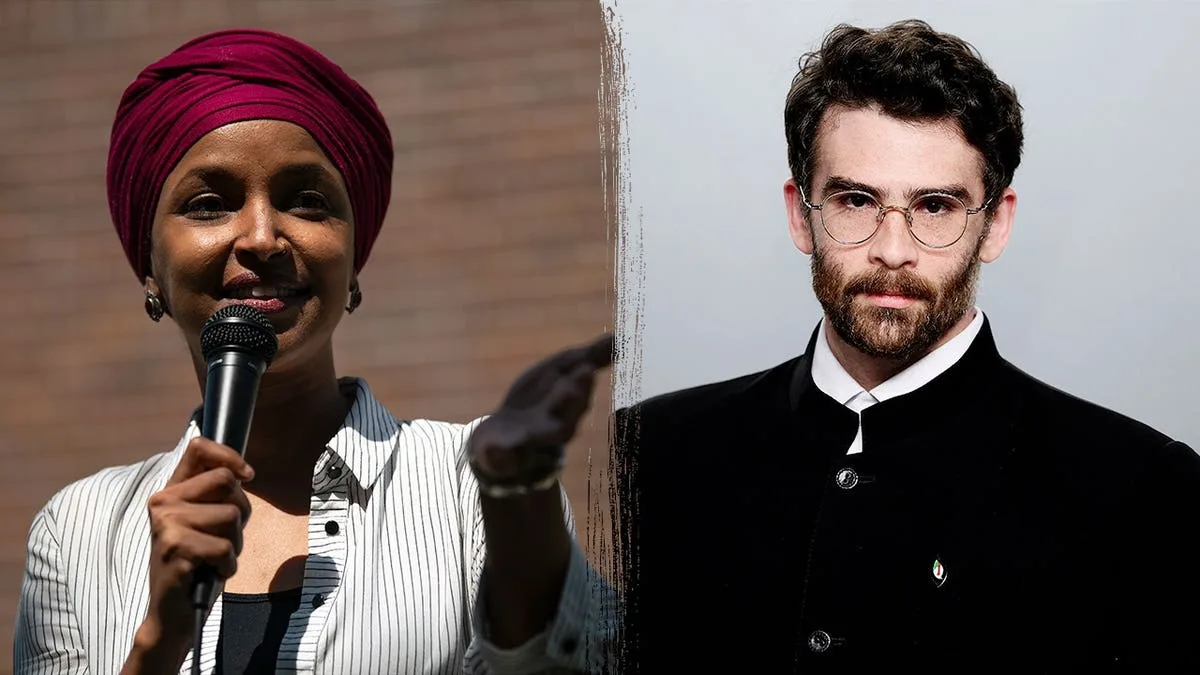
Representative Ilhan Omar Draws Criticism for Alliance with Streamer Known for Incendiary Remarks
Representative Ilhan Omar's recent public appearance with streamer Hasan Piker has ignited debate, particularly after Piker's controversial defense of Omar amidst a federal investigation into her citizenship and
Oct 28
Midterm Elections Defined by Unprecedented Barrage of Negative Campaigning and Personal Attacks
With the midterm elections drawing near, the political landscape is dominated by an intense wave of negative ads and personal attacks. High-stakes races across the country are seeing campaigns deploy increasingly harsh
Oct 26
Senate Control Remains Uncertain Amidst Shifting Political Landscape
Political observers are closely watching the battle for Senate control, with many key races showing extremely tight margins. Despite projections, the outcome remains highly unpredictable due to local factors and varied
Oct 20

Unraveling the Russia Collusion Narrative: An Examination of Allegations Against Donald Trump
For over two years, claims of Donald Trump's alleged collusion with Russia consumed public discourse and media attention. A new documentary series examines recently declassified documents and other evidence, suggesting
Oct 12