For generations, American military personnel heading into uncertain and perilous circumstances often carried a Bible as a vital personal item. These pocket-sized books frequently returned from conflict zones bearing the marks of war, while others contained deeply personal prayers penned by family members longing for the safe return of their sons and husbands. Some were even encased in metal, intended to be carried close to a soldier's heart, while another journeyed to the remote, frozen expanses of Antarctica, bringing scripture to the far corners of the globe.
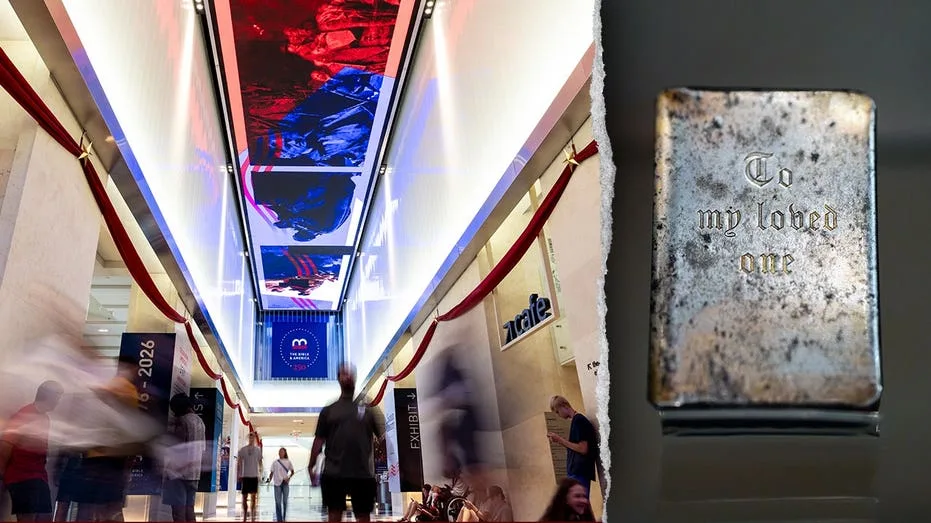
As the United States approaches its 250th anniversary of the Declaration of Independence, a new exhibition at the Museum of the Bible, titled "Bible in Times of War," is showcasing these enduring artifacts. The exhibit meticulously traces how American service members across various generations of conflict sought solace, strength, and hope in the words of the Bible.
Symbolism and Stories of "Heart Shield" Bibles
Among the most recognizable items featured are the so-called "Heart Shield Bibles." These small, pocket-sized Bibles, distinguished by their thin metal covers, were carried by some American service members during World War II and into the Korean War. Typically purchased by relatives for their departing loved ones, these Bibles were designed to fit snugly into a breast pocket, positioned over the heart. This placement fueled persistent tales that the metal-covered books could potentially deflect a bullet.
However, the curator of the exhibit, Seth Viner, explains that the reality behind these stories is less dramatic. He notes that the thin metal covers were largely ineffective against high-velocity ammunition characteristic of World War II-era weaponry. While unlikely to stop a direct bullet, Viner does not discount the possibility that such a Bible might have offered some protection against shrapnel or flying debris.
"Many of the tales that surround the 'Heart Shield Bibles' are likely a bit exaggerated," Viner stated.
Yet, the literal effectiveness of these books in stopping bullets may overshadow their profound symbolic meaning for the families who sent their loved ones to war. Viner describes the metal shield as primarily symbolic, representing a deeper sense of security.
"It was a source of protection. It was a source of strength. It would keep them safe," Viner elaborated.
Some of the most poignant evidence of this hope survives in the heartfelt handwritten inscriptions found inside the covers of these Bibles. Viner points out that small pocket Bibles were mass-produced in the first half of the 20th century, making them accessible purchases for families sending sons, brothers, and husbands off to serve.
One such inscription reads, "To my dear boy, may God keep you safe." Another simply conveys, "praying for you at Christmas." In many instances, Viner notes, historians are unable to identify the authors or recipients of these messages. He suggests that this anonymity can imbue them with even greater power.
"As I read those, I think about how profound and serious and meaningful that was for the family members who sent their kids, their loved ones off to war and gave them this as they left," Viner reflected.
Personal Journeys: From Civil War Battlefields to Antarctic Expeditions
Decades before the advent of the "Heart Shield Bibles," a now-worn Bible journeyed with a Union soldier whose life story has been partially reconstructed by Viner through the very book he carried. John Weissenheimer served with the 107th Ohio Volunteer Infantry, a unit primarily composed of German speakers that participated in brutal Civil War engagements, including the Battle of Gettysburg. Weissenheimer was in his late forties when he enlisted, an age considered advanced for a typical soldier of that era.
Enlistment records indicate that Weissenheimer joined the unit prior to many of its major battles. Years later, an inscription within his Bible places him at Lincoln Hospital in Washington, D.C., serving with the Invalid Corps. This corps comprised soldiers who were injured, ill, or otherwise disabled, rendering them unable to perform regular front-line duties.
While the surviving evidence does not fully detail Weissenheimer's experiences or elaborate on what the Bible personally meant to him, the battered condition of the book itself testifies to its continuous presence in his life. For historians, its survival is perhaps even more significant.
"If not for this Bible," Viner commented, Weissenheimer would be "largely a forgotten name." He added, "This Bible allows us to take this anonymous person from history, this person who no historical textbook is ever going to talk about, and surface them and tell their story."
Whatever hardships Weissenheimer faced, he ultimately transitioned to the Invalid Corps, continuing his service, and his Bible remained with him.
"For some reason, he found something in that Bible that meant a lot to him," Viner observed.
Not every Bible in the exhibition accompanied an American into direct combat. In the 1950s, Navy chaplain Peter Boal participated in Operation Deep Freeze, the overarching designation for U.S. military operations in Antarctica. During his deployment, Boal presented a Bible to an individual identified only as "Bill" in its inscription.
Viner acknowledges that the museum cannot definitively confirm Bill's identity, though he suggests Petty Officer William Stroop, who helped lead an expedition to establish a smaller Antarctic station, as a possible candidate. The message Boal inscribed to the recipient, however, has endured:
"Best of luck on your journey," Viner recounted from the inscription. "We'll be praying for you. We hope the Lord brings you back safely."
For Viner, this particular artifact illustrates the Bible fulfilling a familiar role in an exceptionally distinct environment. Instead of accompanying a serviceman through the rigors of battle, it traveled with Americans venturing into an isolated and unpredictable frontier.
Scripture as a Record and Source of Hope
One of the oldest Bibles in the display dates back to the very foundation of the nation and is accompanied by a narrative Viner describes as more legend than verifiable fact. This German-language Bible was printed in Philadelphia in 1776 by Christoph Sauer and subsequently became known as the "Gun-Wad Bible."
A popular version of its story claims that British soldiers confiscated copies from Sauer's printing press, tore out the pages, and used them as wadding for their muskets—hence the "Wad." An alternative account suggests that American colonists seized the Bibles because the Sauer family was perceived to have Loyalist sympathies. Viner believes there is likely little historical truth to either of these tales. Nevertheless, he concedes that the competing narratives are insightful in their own way, indicating that people understood how portraying an adversary as disrespecting the Bible could damage their reputation, thereby reflecting the significant esteem accorded to Scripture at that period.
Beyond their symbolic value and personal messages, these historic books also preserve more practical, everyday records of how American service members utilized the Bibles they carried. As smaller and more durable editions became widely available, Viner notes that surviving examples often contain handwritten notes and other annotations. Some service members transformed blank pages into personal logs of their movements.
For instance, one soldier during World War I effectively used his Bible as a detailed record of his deployment, chronicling his journey from his hometown to a recruiting depot, then across the Atlantic to New York, England, and France, before finally documenting his return home.
Viner emphasizes that the collection demonstrates how service members, confronted with the immense dangers and stresses of war, responded in various ways. Yet, for many, turning to Scripture provided "strength, courage, relief," and "hope."
Centuries later, some individuals who carried these Bibles remain identifiable, while others are known only by a first name or a few poignant words inscribed within a worn cover. Despite the passage of time, the messages their families entrusted to them as they went into battle resonate with familiarity even today: a prayer for Christmas, a desire for protection, and a heartfelt plea for a loved one's safe return home.
The Bibles in Times of War Exhibit is situated on the second floor of the Museum of the Bible, forming part of the comprehensive Bible in America section.