A federal judge has, for a second time, intervened to temporarily block an executive order from President Donald Trump that aims to restrict mail-in voting. U.S. District Court Judge Indira Talwani issued a 14-day temporary restraining order on Thursday, preventing the enforcement of a new U.S. Postal Service (USPS) rule designed to implement the presidential directive. This ruling comes approximately a week before the initial mail ballots for the upcoming midterm elections are expected to be dispatched.
This decision follows a previous procedural ruling by the Supreme Court that had allowed the administration to proceed with the order, without addressing its underlying legality. Following the high court's decision, Democratic parties and various voting rights organizations refiled their legal challenges, adjusting their arguments to align with the Supreme Court's guidance. The administration had subsequently issued a formal rule dictating how states must prepare and submit mail ballots for acceptance by the USPS, effectively resetting the legal battle.
Impact on Midterm Elections and State Preparedness
The case carries substantial implications for the November midterm elections, given that nearly one-third of American voters cast their ballots by mail. Election officials across the country have expressed concerns, arguing that there is insufficient time to modify their existing systems to comply with the new federal directives before the election cycle intensifies.
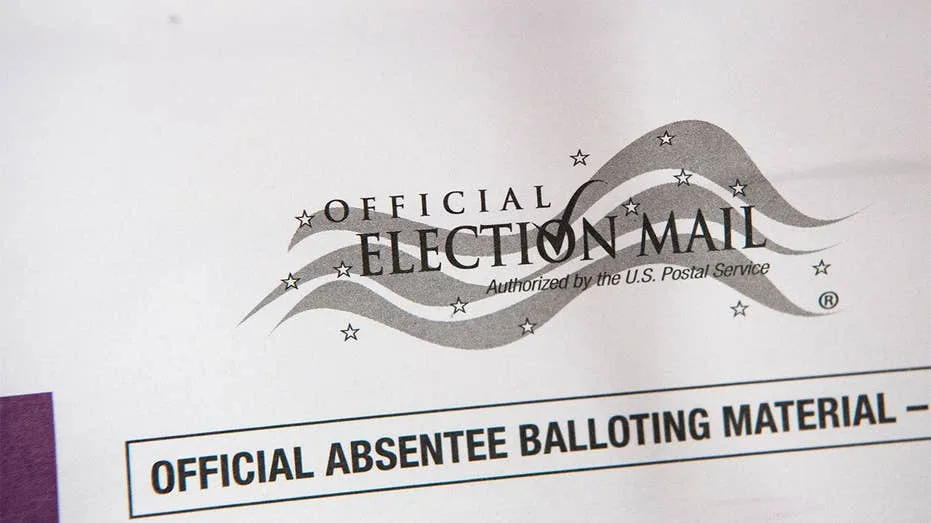
Under the now-blocked Postal Service rule, outbound mail ballots would not be accepted if states failed to submit required recipient information through a dedicated USPS portal or if they did not meet specific envelope and barcode specifications.
Judge Talwani highlighted the practical challenges faced by states in her Thursday ruling. She wrote,
"Plaintiff states have neither time nor funds to design new mail ballots, seek approval of the new designs, order production of mail ballots, update their own election management systems, train election officials to use the USPS portal and upload citizen data to the portal, all before the midterms."
A court hearing concerning the case is scheduled for September 3. The ruling is widely expected to face a swift appeal, potentially returning the matter to the Supreme Court.
Constitutional Challenges and Administration's View
Advocates for Democrats and voting rights groups contend that both the Postal Service rule and President Trump's executive order are unconstitutional. They assert that the U.S. Constitution grants states, and in certain instances Congress, the authority to establish election regulations, not the president or the Postal Service.
Conversely, the USPS maintains that its rule does not determine voter eligibility or compare submissions against state voter rolls. The agency argues that states retain ultimate control over who is permitted to vote by mail.
New York Attorney General Letitia James, representing one of two dozen Democratic attorneys general who initiated a lawsuit, released a statement critical of the order. She stated,
"This rule is a clear attempt by the federal government to interfere in elections it has no power to control. Today, a federal court halted it before this administration could wreak havoc on our elections."
President Trump's initial executive order on mail-in voting, issued the previous year, was similarly blocked on constitutional grounds. That earlier order sought to alter election procedures by mandating additional physical identification for voter registration, such as a U.S. passport, a REAL ID, a military ID proving U.S. citizenship, or a government-issued photo ID accompanied by proof of citizenship.
President Trump has frequently voiced strong opposition to mail-in voting, inaccurately linking it to his loss in the 2020 election to former President Joe Biden. Despite his public stance, President Trump himself utilizes mail-in voting to cast his ballot as a registered voter in Florida.
A 2025 report from the Brookings Institution indicated that instances of mail-in voting fraud were rare, recorded in approximately four cases for every 10 million mail ballots cast. This analysis, which covered general elections from 2016 through 2022 and utilized a database noted by its source as non-comprehensive, contradicts claims made by President Trump and his allies regarding widespread election fraud.
The executive order specifically targeting mail-in voting was initially issued by President Trump in March, immediately prompting legal challenges. Earlier this year, in an unrelated case, a federal judge in Washington chose not to block the order at that stage, deeming the challenge premature since the directive had not yet been fully implemented. The Supreme Court had previously nullified one of these injunctions earlier in the week. Judge Talwani then lifted a second injunction shortly thereafter, leading the plaintiffs to refile their challenges once the Postal Service officially published its final rule, aiming to strengthen their legal position.