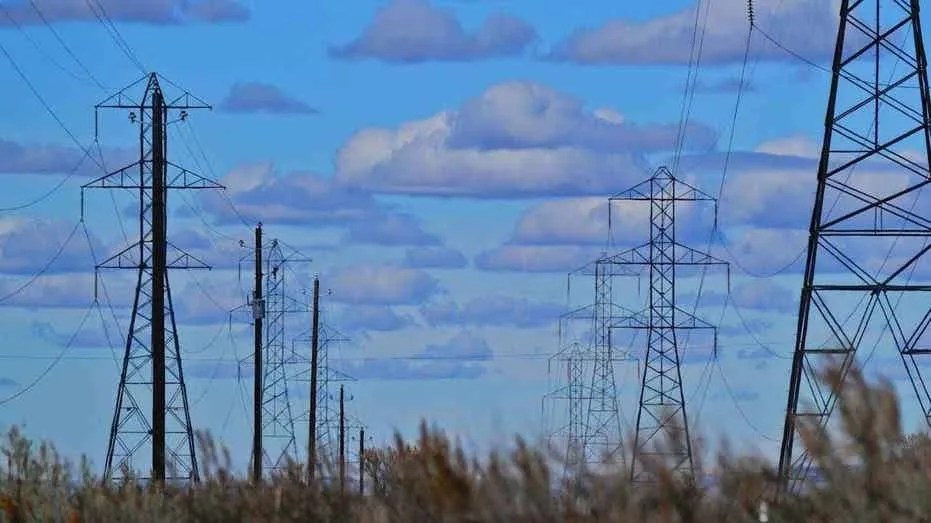
The U.S. Department of Energy (DOE) has enacted an emergency directive designed to avert potential electricity blackouts across 13 states and the District of Columbia. This measure comes as unseasonably high October temperatures are placing significant stress on the electrical grid, which serves more than 60 million residents.
Under this order, the DOE granted PJM Interconnection, the regional entity managing the power grid, authorization to deploy supplementary power generation assets. This decision addresses the concurrent challenges of surging electricity consumption and scheduled maintenance activities at various power plants and transmission facilities.
Emergency Measures to Stabilize the Grid
Issued on Monday under Section 202(c) of the Federal Power Act, the directive became effective on Tuesday and is slated to remain in force until Friday, October 16. It temporarily allows specific power-generating facilities to operate beyond their usual limitations if necessary to sustain a consistent electricity supply.
PJM Interconnection oversees the power supply for all or portions of Delaware, Illinois, Indiana, Kentucky, Maryland, Michigan, New Jersey, North Carolina, Ohio, Pennsylvania, Tennessee, Virginia, West Virginia, and Washington, D.C.
Growing Strain on Electrical Infrastructure
Jeff Shields, a spokesperson for PJM, highlighted the escalating demand for electricity, which is currently outpacing the rate at which new generating capacity can be brought online. He further noted that unpredictable weather patterns are reducing the available windows for essential maintenance and construction work.
Shields explained that what were once routine planned maintenance periods now introduce reliability risks, a challenge grid operators previously encountered predominantly during the peak summer and winter months.
"This order will help ensure millions of American families and businesses across the mid-Atlantic have access to affordable, reliable, and secure electricity by making additional power generation, including backup power, available to use as needed," stated Energy Secretary Chris Wright.
The urgent action coincides with forecasts predicting temperatures in parts of the Ohio Valley and Mid-Atlantic regions to reach into the 70s and 80s Fahrenheit. These elevated temperatures are expected to drive up electricity demand precisely when some generation facilities and transmission lines are offline for scheduled upkeep.
Broader Energy Policy and Infrastructure Investments
Secretary Wright also voiced criticism regarding energy policies from the previous administration, suggesting that restrictions on conventional energy production have compromised the reliability of the nation's power grid.
Separately, the Department of Energy is pursuing significant investments aimed at bolstering the country's electrical infrastructure.
Recently, the DOE unveiled plans to support 84 transmission and distribution projects managed by the Tennessee Valley Authority (TVA) across eight states. These projects represent approximately $581 million in projected investments.
With an allocation of $250 million in federal funding, these initiatives are anticipated to add roughly 2.5 gigawatts of grid capacity, enhance reliability for 2.58 million households and businesses, and create an estimated 800 jobs.
It is important to note that the TVA initiative operates independently of the PJM emergency order, and its final funding and regulatory approvals are still pending.