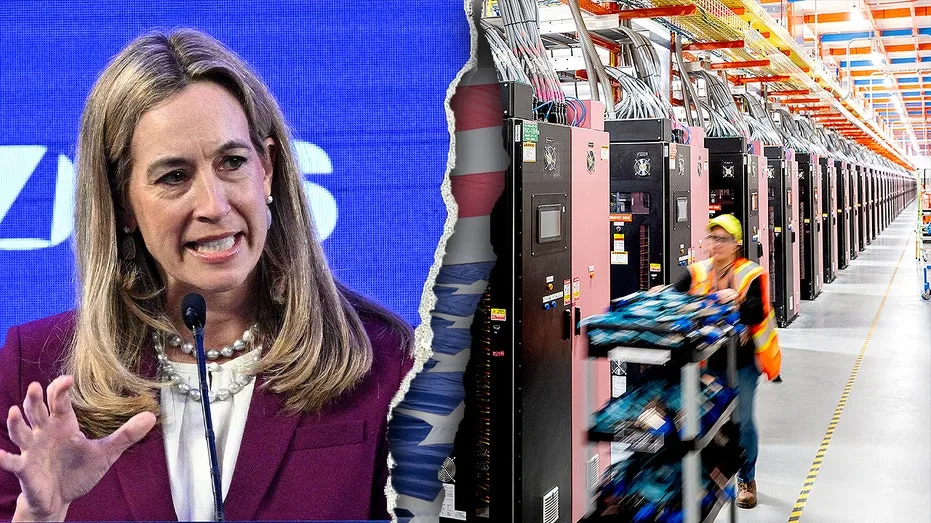
The escalating demand for electricity, fueled by the rapid expansion of artificial intelligence, has prompted states to devise strategies aimed at preventing significant increases in consumer utility costs. Two states, New Jersey and Indiana, have adopted markedly different approaches to address the substantial energy requirements of major technology companies.
New Jersey Establishes Statewide Regulatory Measures
New Jersey Governor Mikie Sherrill has championed a proactive regulatory framework, signing legislation in July that establishes statewide guidelines for large data centers connecting to the power grid. Under this new law, the New Jersey Board of Public Utilities is mandated to create a distinct rate structure specifically for these energy-intensive facilities.
A key provision ensures that the expenses associated with new substations, transmission lines, or other grid enhancements primarily constructed for data centers are not passed on to other electricity customers. Furthermore, the legislation requires large data centers to commit to paying for at least 85% of their requested electricity capacity over a decade. This measure aims to mitigate financial risks to the utility in the event a data center reduces its power usage or ceases operations.
The law also directs regulators to incentivize data centers to integrate clean energy generation or storage solutions, enhance energy efficiency, and curtail electricity consumption during periods of peak demand or emergencies. Complementing these ratepayer safeguards, Governor Sherrill signed additional legislation requiring data center operators to report their energy and water usage to the state biannually. Her administration states that this reporting, combined with new municipal guidance, will provide officials with a clearer understanding of data center demands, enabling communities to evaluate local impacts and negotiate effectively with developers.
Indiana Pursues Negotiated Utility Agreements
In contrast to New Jersey's broad regulatory mandates, Indiana has opted for a more localized, negotiated approach. State regulators recently approved an agreement forged between Indiana Michigan Power (I&M), a utility serving customers in Indiana and Michigan, consumer advocacy groups, and major technology firms.
This agreement emerged in response to several large-scale projects planned within I&M’s service territory, including Amazon Web Services' announcement of an $11 billion data-center campus near New Carlisle and Google's $2 billion project in Fort Wayne. The utility and state officials faced the challenge of determining how to cover the costs for the additional power and grid infrastructure needed to support these developments.
According to I&M, the 2025 agreement stipulates that new large customers, including data centers, must make long-term financial commitments to pay for the electrical service they request, even if their future energy consumption falls below initial projections. I&M asserts that these commitments will transform the increased demand into a benefit for existing customers. The utility is currently seeking regulatory approval to reduce base rates by $59 million in 2027, attributing this potential reduction to the revenue generated from large customers, including data centers.
Should the Indiana Utility Regulatory Commission approve the proposal, I&M estimates that an Indiana household consuming 1,000 kilowatt-hours of electricity per month could save approximately $100 annually. The utility has also proposed a three-year freeze on all rates appearing on customers’ monthly bills, with a decision anticipated in June 2027 and any resulting savings commencing that summer.
Expert Calls for Integrated Power Generation
Daniel Turner, executive director of the energy advocacy organization Power The Future, weighed in on the contrasting state strategies. While he viewed Indiana's model as superior to New Jersey's more prescriptive framework, Turner argued that neither state has gone far enough to ensure that the expansion of AI infrastructure actively contributes to the power grid rather than merely consuming its resources.