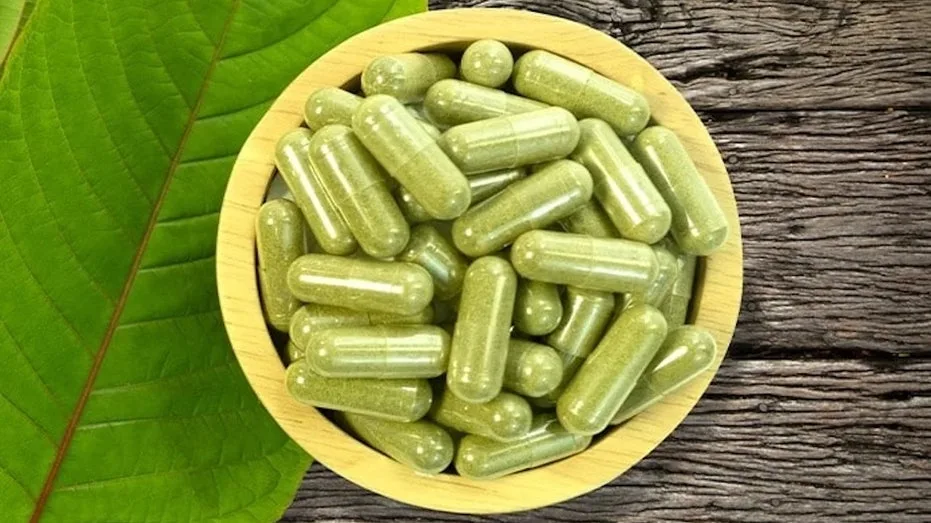
Representatives of the kratom industry are speaking out about potential mischaracterizations of the product, following an ongoing investigation into the deaths of two students at a Mississippi university.
Court records indicate that Aidan Hamilton, 18, and Robert Strang, 20, were found deceased on September 21 at separate locations.
Initial reports suggested that substances described as "packaged kratom" or "synthetic kratom" were discovered near both students. However, a statement released by investigators on September 30 clarified that only "packaging associated with kratom-related products" had been recovered at the sites.
"During the investigations, packaging associated with kratom-related products was discovered at both locations," stated Lafayette County Metro Narcotics, a department within the sheriff's office, in their Wednesday announcement.
Toxicology results from the medical examiner are still pending.
Investigation Into Student Deaths and Product Identification
Court documents reveal that the packaging found near both students carried the name Modus. An affidavit described the tablets as Smax Pseudo-DHM, and listed pseudoindoxyl and MGM-15(DHM) among the ingredients on the package recovered near Hamilton.
A spokesperson for the kratom association stated, "We were deeply concerned with that characterization because it is highly unlikely, if not statistically improbable, that a natural kratom leaf product would be the cause of two deaths independently, let alone one."
After attempts to contact the local police department, the association held a news conference to request clarification on why officials had initially disclosed a packaged kratom product. The subsequent clarification, according to the association, confirmed that the recovered products were "chemically manipulated opioids, not kratom."
The spokesperson expressed gratitude for the clarification, noting, "what they have told us and disclosed is that these, in fact, were highly synthetic and importantly controlled substances under the Federal Controlled Substances Act." He further asserted that "Those products never should have been on the market in the first place in those locations."
Mississippi has a state law, the Kratom Consumer Protection Act (KCPA), which regulates rather than bans the sale of kratom. This law sets standards for sellers, permissible products, and labeling requirements, while also prohibiting certain adulterated or high-potency items. The spokesperson questioned, "Why were they not enforcing it?"
Distinguishing Natural Kratom from Synthetic Compounds
According to the industry representative, natural kratom leaves have been utilized for centuries in Southeast Asia. He contended that there are no published reports of deaths linked to traditional leaf use in the region, though medical literature does document some adverse effects associated with long-term use.
The spokesperson suggested that kratom first gained popularity in the U.S. after the Vietnam War, brought back by returning soldiers and Southeast Asian immigrants. However, researchers point out that this origin story lacks substantiation in published literature.
<"And then these amateur chemists got involved and started tinkering with the alkaloids in the natural plant and started to adulterate them, and that appropriately got kratom on the radar of both the DEA and the FDA," he explained.
In 2012, the Food and Drug Administration (FDA) issued an import alert on kratom products. Later, in 2016, the Drug Enforcement Administration (DEA) sought to temporarily classify kratom's primary alkaloids as Schedule I substances but withdrew the proposal after receiving public comments.
More recently, both agencies have voiced concerns regarding concentrated and chemically modified kratom products, particularly those containing elevated levels of 7-hydroxymitragynine (7-OH).
"What these bad actors have done is completely alter the composition of the natural kratom plant," the spokesperson stated. "They rearranged the molecules. They've chemically synthesized them with high-concentration chlorine and baking soda and other nefarious production methods so that they deliver what is in fact a signature opioid to consumers in the United States."
Calls for Enhanced Regulation and Clarification
The kratom association's current objective is to ban synthetic products while safeguarding the natural leaf. The spokesperson articulated his view, stating, "It is improper for any government agency across the country to be blaming natural leaf kratom for any adverse event that is properly attributable to a synthetic opioid."
He drew an analogy: "If we were to take coffee and extract caffeine from it and then highly concentrate it to a level in which it is fatal and someone ingested it and died, we wouldn't blame coffee. We would blame the bad actor that took and extracted that caffeine, because caffeine is in its natural form and coffee is not dangerous. The same is true for natural kratom."
The spokesperson emphasized that 7-OH products, including pseudoindoxyl and compounds known as MGM-15 and MGM-16, should not be classified as kratom.
"[They] are synthetic opioids, all of which should be enforced by both the federal and local law enforcement agencies," he declared. "We advocate strongly for proper clarification of these dangerous products as opposed to natural kratom, which is literally helping people with their health and wellness and saving lives."
He referenced an NIH-led study currently underway to assess whether purified mitragynine, the primary alkaloid in the kratom plant, could offer a treatment for opioid use disorder.
The association supports state-level regulations that mandate testing, proper labeling, and age restrictions, rather than outright bans. "Make sure the product formulations are safe, make sure the products are labeled correctly and make sure they're age-restricted," he urged. "Twenty-one and up should be the only people who have access to these products."
"We need to regulate them, and as we represent consumers, we're going to fight for that," he concluded.
The FDA maintains that kratom has not received approval for any medical uses and has issued warnings regarding potential risks, including dependence, contamination, and adverse events. Meanwhile, researchers continue to study both the plant and its individual compounds.