House Republicans are prioritizing legislation this week aimed at compelling Democrats to clarify their stance on what they characterize as socialist tendencies within their party.
During its Monday session, the House Rules Committee successfully moved forward a resolution to explicitly condemn socialism, with no Democratic members supporting its advancement. Democrats, in fact, vocally criticized the measure, dismissing it as an unproductive use of legislative time.
Representative Jim McGovern, a Democrat from Massachusetts, described the bill as "nonsense" and contended that it offered little tangible benefit to the lives of American citizens.
"So you're concerned about rising gas, or are you concerned about grocery prices? You know, don't worry. Republicans in Congress are passing another non-binding resolution condemning socialism," McGovern stated.
Heated Exchange Over Defining Socialism
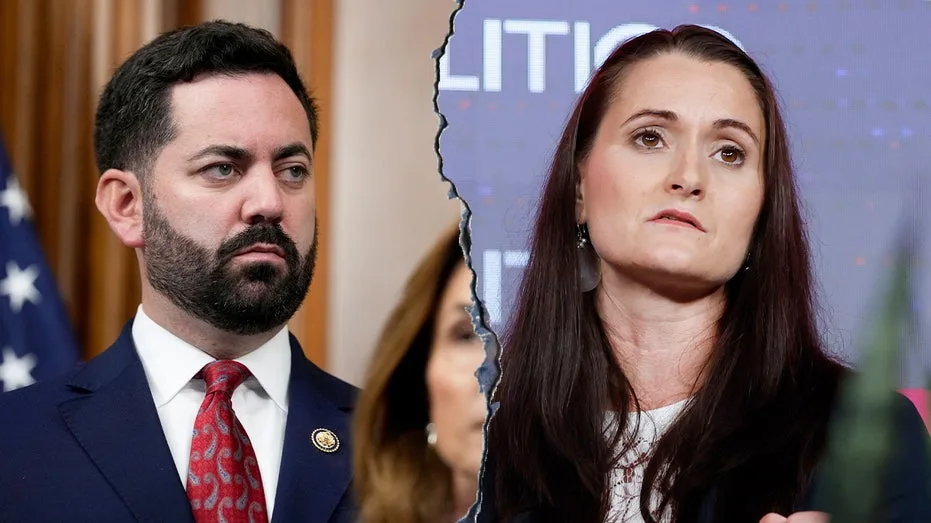
A notable point of contention arose when Representative Joe Neguse, a Democrat representing Colorado, engaged in a testy exchange with Chairman Bryan Steil, a Republican from Wisconsin, who leads the Committee on House Administration. Their disagreement centered on the precise definition of socialism.
Neguse pressed Steil on whether a hypothetical scenario, such as former President Donald Trump attempting to acquire a "20% stake" in a major grocery chain like Kroger, would constitute socialism. Steil responded by saying he would "want to see the details" of such a proposal.
"Oh, you'd want to see the details," Neguse exclaimed, as both lawmakers spoke over each other. "You said if the government owns grocery stores, that would be socialist. But if, of course, Donald Trump were to announce an equity stake in a grocery store, well, 'I'd have to really see the details,' because we all know the play."
Steil clarified that he would consider such a proposal only if it presented a national security imperative, repeatedly emphasizing that Neguse's scenario was purely hypothetical. At one point, Rules Committee Chairwoman Virginia Foxx, a Republican from North Carolina, admonished Neguse for interrupting Steil.
Steil retorted during the exchange, "Some folks on your side of the aisle would like to have government-run grocery stores. I think that's nuts."
"And if the president of the United States announced that the United States government was taking an...equity stake in grocery stores?" Neguse pressed further.
Following continued back-and-forth, Steil reiterated, "I think there would need to be a national security rationale for the action. I don't see any in your hypothetical. I don't see a national security focus."
Neguse characterized Steil's response as a "helpful answer," to which Steil quipped, "It's a hypothetical. So we're entering silly season."
Beyond Socialism: Supreme Court and Election Integrity
While Democratic opposition to Republican-led initiatives on the House Rules Committee is not unusual, the current push is particularly pronounced as Republicans seek to leverage internal divisions within the left that have been prominent during the recent midterm election cycle.
Republicans are also advancing another legislative measure, anticipated for a vote on Wednesday afternoon, according to the provisional schedule. This vote concerns a constitutional amendment that would permanently limit the number of Supreme Court justices to nine.
This initiative comes in response to calls from several prominent progressive figures, including former Vice President Kamala Harris and Senators Elizabeth Warren of Massachusetts and Ed Markey of Massachusetts, who have advocated for expanding the Supreme Court to as many as 13 seats.
House Republican leadership has chosen to fast-track this legislation, bypassing the House Rules Committee. However, this procedural move means the bill will require a two-thirds majority of the chamber to pass, rather than a simple majority.
A Republican leader articulated the strategy: "Do you want to pack the Supreme Court or not? It's really simple. It's a yes or no vote. It's no bigger than that. Two — do you believe in socialism? If you do, you should say it loud and say it proud. I personally don't believe in socialism. I like the fact that we have a democracy, that we have a republic, that we have a free society. And I'm proud to put myself on record."
Democratic Counterarguments and Criticisms
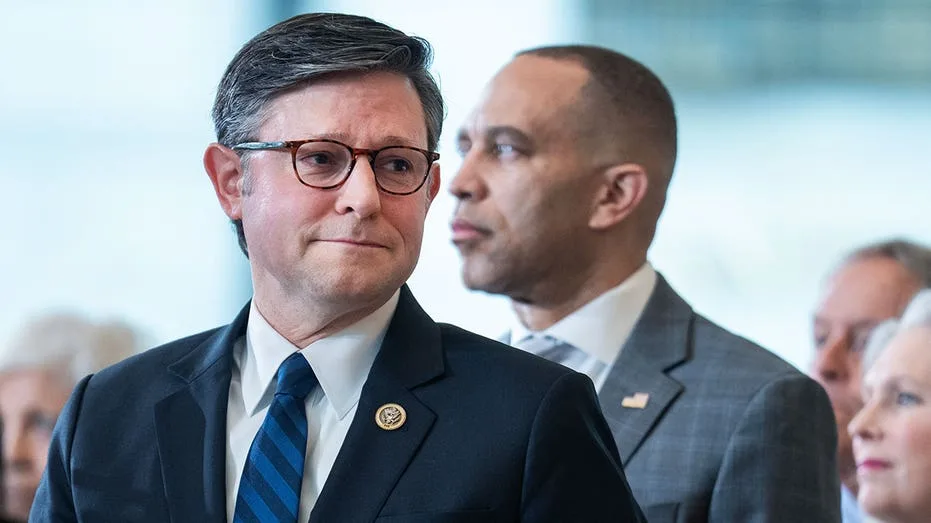
House Minority Leader Hakeem Jeffries, a Democrat from New York, sidestepped a direct question on Monday regarding his support for the anti-socialism resolution.
"I haven't taken a look at that resolution, although it's my understanding that the resolution elevates the so-called SAVE America Act, which is just the 'Suppress the Vote Act.' And I'm not clear how many Democrats are actually gonna support a resolution whose focus is on trying to rig the midterm election by elevating this voter suppression legislation that Donald Trump has been trying to jam down the road to the American people for the last year," Jeffries told reporters.
The resolution, in addition to condemning socialism, also commends Republican-backed election security proposals as "common-sense election integrity measures, including proof of citizenship, photo identification, and database checks." It specifically advocates for the "enforcement" of the Safeguarding American Voter Eligibility (SAVE) Act, a bill that has passed the House but has not yet been considered by the Senate.
Democrats have largely dismissed such legislation as thinly veiled attempts at voter suppression.
Representative Mary Gay Scanlon, a Democrat from Pennsylvania, asserted that the bill was an effort to "silence political opponents."
"Let's scare people with yet another boogeyman and not do anything about it. Not really solve problems, just try to scare people," Scanlon commented.
Conversely, Representative Nick Langworthy, a Republican from New York, highlighted the presence of Democratic socialists in positions of power within his own state, cautioning that these ideologies could spread further.
"I've seen firsthand the alarming rise of socialism...families in western New York have watched one-party rule in Albany pile on more taxes, more mandates, more government control, while hardworking taxpayers are left to foot the bill," Langworthy stated. "And now downstate, we've watched the socialist left move more from the activist fringe into positions of real, serious political power. And anyone thinks that these ideas are going to stay confined in New York City is sadly mistaken."