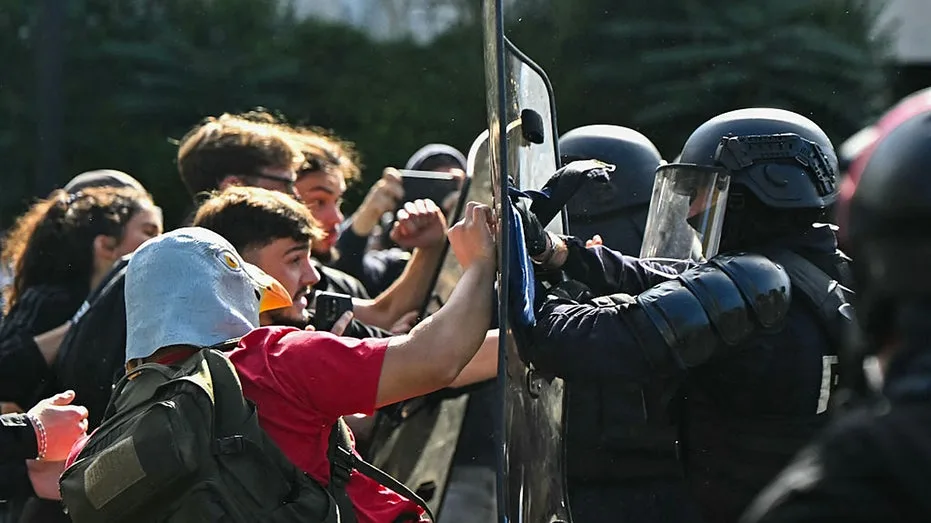
Violent student protests unfolding across France are prompting renewed discussions about the implications of open-border immigration policies, with some observers characterizing the unrest as a "cautionary tale" for nations like the U.S.
Commentators have suggested that countries could learn from Europe's experience. This perspective argues that policies emphasizing open borders and diversity as a primary strength, if not carefully managed, can lead to societal challenges. It is posited that a significant influx of people who heavily utilize public systems can eventually lead to discontent among the existing population. This frustration, it is argued, can sometimes escalate into destructive acts, ultimately affecting the native citizens most severely.
Unrest Ignites Debate on Immigration and Social Strain
The demonstrations began late last month in Paris, initially in its less affluent suburbs. Students articulated grievances over issues such as overcrowded classrooms, a scarcity of teachers, extended school days, and a general decline in educational facilities. They attributed these problems to insufficient government investment in the education sector.
What started as peaceful protests rapidly expanded beyond Paris to encompass cities nationwide, including Marseille, Strasbourg, Tours, Nantes, Toulouse, and Lille. As the movement spread, it also grew increasingly violent.
Further fueling the unrest was the government’s 2027 budget announcement on Thursday. Reports indicated that education spending would see an increase of only 1.7%, a figure that excludes teacher pensions and falls below the current rate of inflation, according to Reuters.
Rioters have engaged in acts of arson, vandalism, and thrown projectiles at law enforcement officials. In some instances, individuals have been assaulted. Authorities have responded to these escalating confrontations with tear gas and rubber bullets.
This week alone, more than 5,000 protesters were arrested across the country, Reuters reported. By Friday, over 400 schools remained closed due to the ongoing disturbances. Euronews reported on Friday that at least 65 school staff members, including 40 principals, have sustained injuries since the start of the unrest, alongside approximately 170 students. Education Minister Édouard Geffray stated that more than 100 high schools have incurred "severe damage."
Political Accusations Amidst Growing Violence
French intelligence agencies informed a government crisis meeting on Thursday that the protest movement was initiated by politicians from the hard-left France Unbowed Party (LFI), Reuters reported on Friday.
LFI has refuted these allegations, accusing President Emmanuel Macron's administration of politicizing the protests in anticipation of France's 2027 presidential election.
The students’ grievances about missing teachers and deteriorating schools were real at first. But dousing a principal in gasoline and attacking firefighters are acts of extreme violence. What makes this politically significant is the effort to turn frustration over schools into a much broader confrontation with the government.