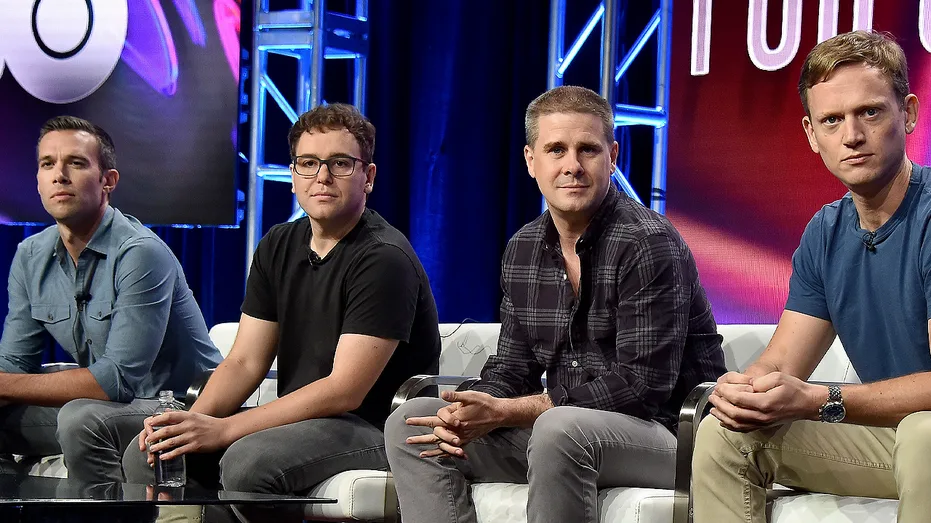
Former advisors to the Obama administration, who host a prominent political podcast, recently discussed the perceived reasons behind some major Democratic donors' reluctance to contribute funds, even as the party observes encouraging indicators for the upcoming November midterm elections.
During a session at the Texas Tribune Festival, the podcast hosts conveyed optimism regarding the possibility of Texas shifting politically, attributing this to challenges faced by Republicans in swing states. Dan Pfeiffer highlighted several factors potentially disadvantaging Republicans, even in traditionally conservative regions, but cautioned that Democrats operate with significantly less financial backing compared to the GOP.
Tommy Vietor responded, stating, "I think those spending restraints compared to the opportunity are why you're starting to hear some, you know, sort of operatives and candidates like voicing concern and frustration that some of the traditional like big, big donors of the Democratic Party, are not viewing this as the generational opportunity that it could be."
He elaborated on a conversation he had, describing an "extreme optimistic picture" where Democrats are not only performing well on the generic ballot but are also excelling on the most crucial issues, a situation he noted was not the case in 2024. Vietor suggested that if the midterm election outcomes mirror recent special elections where Democrats outperformed expectations, it would present "truly a historic opportunity to win statewide races, congressional races, down-ballot, up and down." He expressed that it feels like a moment when the party's largest donors "should be pushing all their chips in the table as aggressively as possible and not holding back for — I don't know what reason — Trump bothering them?"
Donor Reticence and Political Fallout
Pfeiffer acknowledged a "huge shift in the funding approach... in the large donor community since 2024." He suggested that part of this shift stems from individuals still feeling "angry about how that election went and feeling like they lit a billion dollars on fire in that election, which is a fair quibble in some ways."
He further elaborated on a chilling effect, noting, "There are a lot of people who are very afraid of being targeted by Trump like that just that your business is going to be targeted. You're going to have all of a sudden, you're going to the FBI is going to show up at your door. You're going to have regulatory scrutiny you wouldn't have before. And so that has limited money."
Pfeiffer contended that the current midterm election could potentially lead to "one of the largest swings in American history, something where Democrats could pick up races we've never even thought possible." He drew parallels to past electoral shifts, saying, "We've been using 2006 as like the most relevant example of an election because it's you know, it's an unpopular president, unpopular war, all of that. But it very well could be a little more like '94, where everything changes where it's a realigning election."
Alternative Views on Donor Hesitation
Julian Epstein, a Democratic consultant, offered a different perspective, disputing the claims made by the podcasters. Epstein argued that "Donors are holding back because the Democrats don't have any attractive, positive agenda." He also pointed out that Democrats currently have a lower approval rating than the president.
"Democrats used to be about building; today they are about tax-and-spend redistributionist big government welfare. They are about the victim Olympics."
Epstein challenged the notion of public support for the party's platform, adding, "Try going out on the street and ask 10 voters to name three things Democrats stand [for] today. I doubt you'll find any that can."
Concerns Over Return on Investment and Policy Direction
Republican consultant Mary Marslender indicated that the former Obama aides might have identified a crucial factor. Marslender cited the 2024 presidential campaign of Kamala Harris, which she noted "spent a staggering $1.5 billion in just 15 weeks, losing the popular vote, the Electoral College, the Senate, the White female vote, and support among both Latino and working-class voters."
Marslender emphasized the inefficiency of this spending, stating, "That’s the equivalent of spending $25,000 per hour only to lose nearly every key demographic and benchmark the campaign touted as strengths." She concluded that "Major donors who contributed eight-figure sums in 2024 have noticed this poor return on investment and appear less willing to spend this cycle."
Furthermore, Marslender suggested that many prominent Democratic donors have reduced or withheld contributions due to "concerns about the Party’s shift toward socialist policies." She observed that "Unsurprisingly, calls to destroy the country’s financial institutions have not resonated well with wealthy Democratic supporters."